

“A lump in the neck is often harmless. But a lump that stays, grows, or appears without an obvious reason deserves attention.”
“Doctor, I noticed this swelling in my neck a few weeks ago. It doesn’t hurt. Should I be worried?”
This is a question I hear regularly.
Most of us have experienced swollen glands at some point—during a throat infection, dental infection, fever, or even a common cold. In these situations, lymph nodes in the neck can enlarge as part of the body’s natural response to infection and usually settle once the infection resolves.
But what happens when they don’t?
What if the swelling remains for weeks?
What if there is no pain, no fever and no obvious infection?
As an Oral Cancer Surgeon Pune, I believe one message is particularly important:
Don’t panic about every neck swelling. But don’t repeatedly ignore one that refuses to disappear.
Sometimes, the neck gives us the first warning of a problem occurring somewhere else.
A Conversation from My Clinic
A gentleman in his late forties once came to my clinic because of a small swelling on one side of his neck.
He felt completely well.
No fever.
No significant pain.
No difficulty eating.
He had already taken antibiotics twice. The swelling would appear slightly smaller for a few days, but it never completely disappeared.
When I asked what had finally brought him to me, he said:
“Doctor, honestly, the swelling doesn’t trouble me. My family just keeps telling me to get it checked.”
During examination, I noticed something else—a small abnormal area inside his mouth that he hadn’t even been aware of.
Further investigations eventually confirmed an oral cancer with involvement of a lymph node in the neck.
Understandably, his first question was:
“But Doctor, shouldn’t cancer be painful?”
Unfortunately, not always.
As an Oral Cancer Surgeon Pune, this is something I repeatedly explain to patients:
Pain tells us something is happening. The absence of pain doesn’t always tell us that everything is fine.
Why Do Lumps Develop in the Neck?
There are many structures in the neck, so a swelling can have several causes.
Common possibilities include:
- Enlarged lymph nodes after infection
- Dental or throat infections
- Salivary gland problems
- Thyroid swellings
- Cysts
- Benign growths
- Tuberculosis and other infections
- Lymphoma
- Cancers arising in the head and neck region
The good news is that most neck swellings are not automatically cancer.
But determining the cause matters.
An experienced Head & Neck Cancer Surgeon Pune evaluates much more than the size of the swelling. Its location, consistency, duration, mobility, associated symptoms and the patient’s age and risk factors all provide useful information.

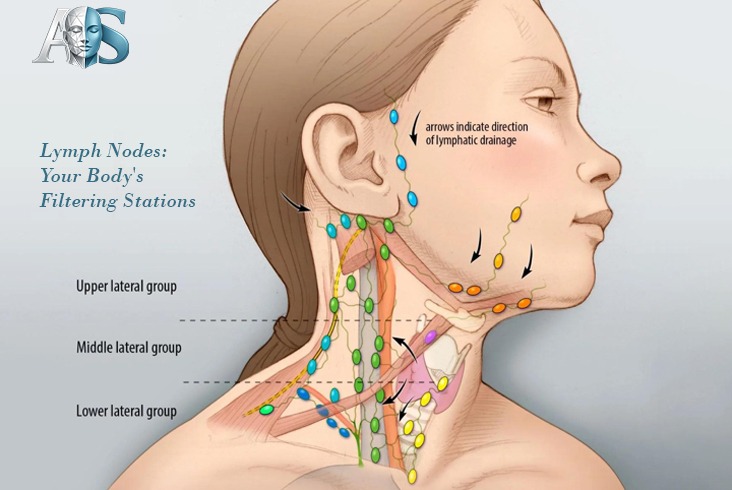
What Are Lymph Nodes—and Why Do They Become Enlarged?
Think of lymph nodes as small checkpoints of the immune system.
Hundreds of lymph nodes are present throughout the body, including many in the neck.
When there is an infection in the throat, mouth, teeth or surrounding tissues, nearby lymph nodes may become enlarged while the immune system responds.
These nodes are often tender and may settle after the infection resolves.
However, lymph nodes also play an important role in cancers of the mouth and head and neck.
Cancer cells can sometimes travel from the original tumour through lymphatic channels and reach lymph nodes in the neck.
This is why a Mouth Cancer Surgeon carefully examines the neck even when a patient’s main complaint is only an ulcer or patch inside the mouth.
When Should a Neck Swelling Be Taken More Seriously?
A neck lump deserves proper evaluation particularly when it:
- Persists for several weeks
- Gradually increases in size
- Feels firm or hard
- Is painless and unexplained
- Returns after repeated courses of medication
- Appears without a recent infection
- Is associated with unexplained weight loss
- Occurs along with difficulty swallowing or persistent change in voice
- Is associated with a non-healing mouth ulcer
- Occurs with a persistent white or red patch inside the mouth
These signs don’t prove that you have cancer.
They simply tell us:
This swelling deserves an explanation.
If it persists, consultation with an Oral Cancer Specialist Pune or appropriately trained head and neck specialist is better than repeatedly taking antibiotics without establishing a diagnosis.

Can Oral Cancer First Appear as a Neck Lump?
Yes.
Sometimes the original cancer inside the mouth or throat is relatively small and causes very few symptoms.
The patient may first notice an enlarged lymph node in the neck.
This is particularly important in cancers involving parts of the throat, tonsils, base of the tongue and other head and neck regions, where the primary tumour may not be easily visible to the patient.
That’s why an Oral Cancer Surgeon Pune or Head & Neck Cancer Surgeon Pune doesn’t examine only the lump.
We examine the entire mouth, tongue, throat and relevant head and neck structures to understand where the problem may be coming from.

“Doctor, Should I Just Take Antibiotics First?”
Sometimes antibiotics are appropriate—particularly when the clinical picture genuinely suggests a bacterial infection.
But antibiotics should not become a way of postponing diagnosis.
I occasionally meet patients who have received three or four courses of antibiotics because the swelling temporarily reduced but never disappeared.
If a neck lump persists despite appropriate treatment, the question should change from:
“Which medicine should I try next?”
to:
“Why is this swelling still there?”
That change in thinking can be extremely important.
How Is a Persistent Neck Lump Investigated?
The first step is usually a thorough clinical examination.
Depending on the findings, investigations may include:
- Ultrasound of the neck
- Fine-needle aspiration cytology (FNAC)
- Biopsy in selected situations
- CT or MRI
- PET-CT when clinically indicated
- Examination of the mouth and throat
- Additional investigations depending on the suspected cause
Not every patient requires every investigation.
The purpose is to obtain the right information with the least unnecessary testing.
A Maxillofacial Surgeon Pune dealing with oral and head & neck disease will also carefully examine the teeth, gums, tongue, cheeks, jaw and other structures that may provide clues to the diagnosis.

What If the Neck Node Is Related to Oral Cancer?
This is understandably frightening for patients.
But a lymph node in the neck does not mean that treatment is impossible.
The number, size and location of involved lymph nodes are considered along with the primary tumour while deciding the stage and treatment plan.
Depending on the situation, treatment may involve surgery to remove the oral cancer together with appropriate treatment of the lymph nodes in the neck. Some patients may also require radiotherapy or chemotherapy after surgery.
For larger defects, reconstruction may be necessary to restore function and appearance.
As a Mouth Cancer Surgeon and Maxillofacial Surgeon Pune, I believe the objective should always extend beyond removing disease.
We should also think about speech, swallowing, appearance, rehabilitation and returning the patient to normal life.
What I Want My Patients to Remember
Most neck swellings have explanations other than cancer.
So don’t panic.
But don’t become falsely reassured simply because a lump:
doesn’t hurt,
isn’t very large,
or temporarily became smaller after medication.
If it persists, get it evaluated.
A consultation with an Oral Cancer Surgeon Pune, Oral Cancer Specialist Pune, or Head & Neck Cancer Surgeon Pune may simply provide reassurance.
And occasionally, it allows us to identify a serious problem much earlier.
A Note from Dr. Ankit Shah
One of the commonest reasons patients delay seeking help is surprisingly simple:
“Doctor, there was no pain, so I didn’t think it was serious.”
As an Oral Cancer Surgeon Pune, I understand that reasoning.
But cancer does not always announce itself dramatically.
Sometimes it begins with a small ulcer.
Sometimes a white patch.
Sometimes reduced mouth opening.
And sometimes, the first thing a patient notices is simply a painless lump in the neck.
As a Mouth Cancer Surgeon, I don’t want people to become frightened by every swelling they discover.
I want them to become aware.
There is an important difference.
Don’t fear every neck lump. But respect one that refuses to go away.
Because when something in your body persists without a clear explanation, the safest next step isn’t another month of waiting.
It is finding out why.