
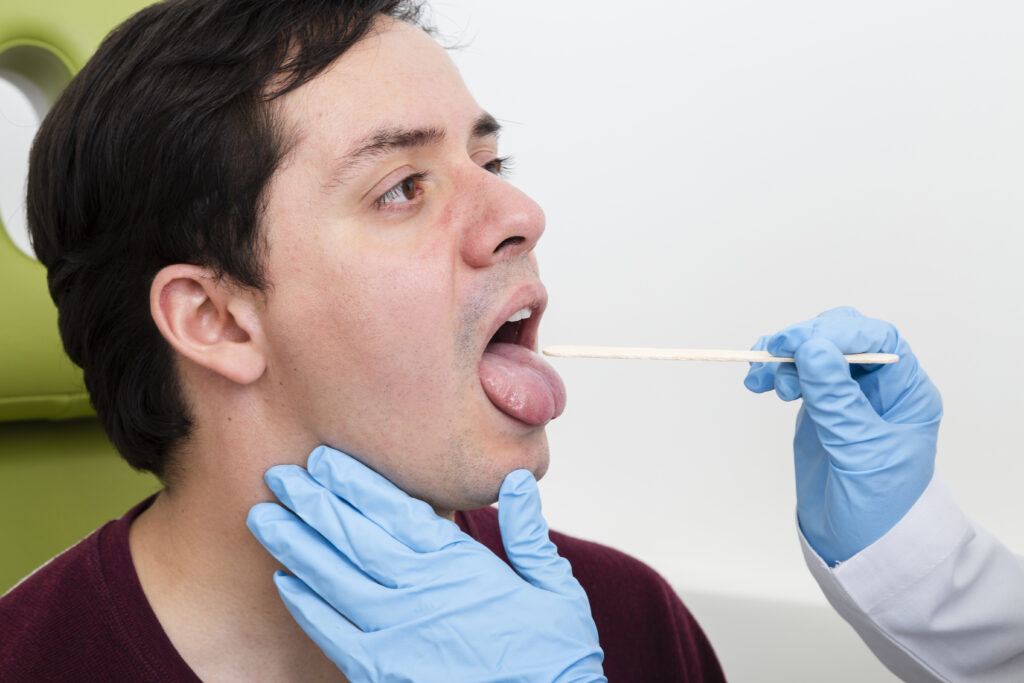
Some persistent ulcers may be associated with other warning signs such as reduced mouth opening or tobacco-related changes.
“Not every mouth ulcer is cancer. But every ulcer that doesn’t heal deserves attention.”
Almost everyone develops a mouth ulcer at some point. It may appear after accidentally biting the cheek, eating very spicy food, irritation from a sharp tooth, stress, or a minor infection. Most ordinary ulcers gradually become smaller and heal completely within one or two weeks.
However, there is one situation that should never be ignored:
If a mouth ulcer has not healed within two weeks, it should be examined by a specialist.
As an Oral Cancer Surgeon in Pune, one of the most common statements I hear from patients is:
“Doctor, I thought it was just another mouth ulcer.”
Unfortunately, some patients continue using mouth gels, painkillers, home remedies, or repeated courses of medication for several weeks. By the time they seek proper medical attention, the condition may have progressed.
The encouraging part is that early diagnosis can make a major difference—not only to cancer treatment, but also to recovery, speech, swallowing, facial appearance, and quality of life.
A Conversation from My Clinic:
A few months ago, a gentleman in his early forties visited my clinic with a small ulcer on the side of his tongue. He had been treating it with different mouth gels and painkillers for almost three months.
Because the ulcer was not very painful, he assumed it would eventually heal on its own.
When I asked why he had waited so long, he replied:
“Doctor, I never imagined that such a small ulcer could be something serious.”
After a thorough examination and biopsy, the ulcer was diagnosed as oral cancer.
Fortunately, we were able to treat him with surgery, and he is recovering well. But his experience reinforces something I tell almost every patient:
Pain is not always the first warning sign of oral cancer. Time often is.
As an Oral Cancer Surgeon practicing in Pune, I see similar situations regularly. Many patients do not come because the ulcer is painful. They come because it simply refuses to heal.

How do you know if a mouth ulcer is serious?
Most harmless mouth ulcers are uncomfortable or painful during the first few days. They then gradually reduce in size and disappear within 7–14 days.
A non-healing ulcer in the mouth may behave differently. It may:
- Remain in the same place for several weeks
- Slowly increase in size
- Bleed occasionally
- Feel hard or irregular around the edges
- Cause discomfort while eating or speaking
- Be associated with a white or red patch
- Sometimes cause very little pain
That last point often surprises patients.
Many people believe that a painless ulcer cannot be dangerous. Unfortunately, early oral cancer can sometimes be completely painless. Waiting for severe pain before seeking help may delay diagnosis.
When Should You Consult a Specialist?
If you have an ulcer for more than two weeks, especially with a history of tobacco use, do not continue changing gels, mouthwashes, or home remedies without proper evaluation.
Consult an Oral Cancer Surgeon in Pune or an experienced Mouth Cancer Surgeon for a clinical examination.
You should also seek medical advice if the ulcer is accompanied by:
- A white or red patch inside the mouth
- Reduced mouth opening.
- Difficulty chewing or swallowing
- Persistent pain in the tongue, cheek, or jaw
- A lump or swelling in the neck
- Unexplained loosening of teeth
- Numbness of the tongue, lip, or cheek
- A change in voice or speech
These symptoms do not always mean cancer. However, they deserve careful examination rather than prolonged self-treatment.
What role does tobacco play?
A common misconception is that tobacco mainly damages the lungs.
In reality, the mouth is often the first part of the body exposed to tobacco. Gutkha, khaini, paan with tobacco, mishri, cigarettes, and other tobacco products repeatedly irritate the lining of the mouth.
Over time, this exposure may lead to:
- Recurrent ulcers
- White or red patches
- Burning sensation
- Stiffness of the cheeks
- Reduced mouth opening
- Precancerous changes
- Oral cancer
Some people casually refer to persistent sores in tobacco users as tobacco ulcers. While every ulcer in a tobacco user is not cancer, any persistent ulcer in such a person must be taken seriously.
Ignoring these changes for months is one of the common reasons patients eventually present with advanced mouth cancers.
Can oral cancer be detected early?
Yes—and this is the most hopeful part.
When oral cancer is diagnosed at an early stage, treatment is often less extensive. Recovery may be faster, and the chances of preserving speech, swallowing, appearance, and normal daily function are generally better.
Modern oral cancer treatment is not only about removing the tumour. It is also about helping patients return to eating, speaking, working, and living confidently.
An experienced Mouth Cancer Surgeon, supported by a multidisciplinary oncology team, can plan treatment according to the location and stage of the disease. Surgery may sometimes be followed by radiotherapy or chemotherapy, depending on the final reports.
For larger cancers involving the tongue, jaw, cheek, or facial tissues, reconstructive surgery may be required. A Maxillofacial Surgeon in Pune with experience in microvascular reconstruction can help restore the removed tissues using advanced techniques such as free flaps.
The objective is not merely to close a surgical defect. It is to preserve function, facial form, speech, swallowing, and long-term quality of life.
Can every mouth ulcer be prevented?
Not every mouth ulcer can be prevented, but many important risk factors can be reduced.
Simple steps include:
- Stop tobacco in all forms
- Limit alcohol consumption
- Maintain good oral hygiene
- Attend regular dental check-ups
- Treat sharp or broken teeth
- Ensure that dentures fit properly
- Do not ignore white or red patches
- Seek evaluation for any ulcer lasting beyond two weeks
Awareness remains the most important habit.
A message I share with every patient
Patients often ask:
“Doctor, can you tell from a photograph whether this ulcer is dangerous?”
My answer is always honest.
A photograph sent on WhatsApp may provide limited information, but it cannot replace a proper clinical examination. No responsible surgeon should diagnose or exclude cancer from an image alone.
Most people who consult early are relieved to discover that their ulcer is not cancer. For the smaller number in whom cancer is diagnosed, early detection offers the best chance of simpler treatment and better functional recovery.
Waiting another month rarely improves the situation.
Many patients ask whether oral cancer can be cured. The answer depends largely on how early it is diagnosed and treated.
What I Want My Patients to Remember
Finding a mouth ulcer can be worrying, but there is no reason to panic.
Remember the sentence we began with:
Not every mouth ulcer is cancer. But every ulcer that doesn’t heal deserves attention.
If you notice a non-healing ulcer, reduced mouth opening, persistent discomfort, a white or red patch, or any other oral cancer symptoms, do not rely indefinitely on home remedies.
If you are searching for an Oral Cancer Surgeon in Pune, an experienced Mouth Cancer Surgeon, or a Maxillofacial Surgeon in Pune, seek advice before the symptoms become severe.
A timely consultation may provide reassurance. And when treatment is needed, early diagnosis can help preserve much more than life—it can protect speech, swallowing, appearance, confidence, and independence.
If you notice a reduced mouth opening, white or red patches, or persistent burning…
👉 Learn more about oral cancer treatment and rehabilitation at: https://drankitsshah.com
About Dr. Ankit Shah
Dr. Ankit Shah is an Oral Cancer Surgeon in Pune, Maxillofacial Surgeon in Pune, and Oral Cancer Treatment Specialist in Pune, with expertise in the early diagnosis and treatment of oral cancer. He specializes in oral, head & neck cancer surgery, microvascular free flap reconstruction, facial reconstruction, and dental rehabilitation, helping patients receive timely treatment while preserving speech, swallowing, facial appearance, and quality of life.